20 Facts About Sri Lanka That Will Surprise You
The word "serendipity" literally comes from Sri Lanka. The country was the first in the world to elect a female head of government. Its national sport is not cricket, it is volleyball. And it has been inhabited for at least 35,000 years.
Sri Lanka is full of stories that most travellers never hear. Here are 20 facts about this remarkable island that go well beyond the beaches and the tea.
In this post
Geography and History
Sri Lanka has two nicknames -- and both tell a story
Sri Lanka is known by two names: the "Pearl of the Indian Ocean" and the "Teardrop of India". The first comes from its extraordinary natural beauty, incredible biodiversity and the precious gemstones the country has exported for centuries. The second comes from its shape and locatio. From a map, Sri Lanka sits off the southern tip of India, small and curved, not unlike a teardrop.
Throughout history, the island has collected other names too. Ancient Greeks called it Taprobane. Arab traders knew it as Serendib. The Portuguese renamed it Ceilao, which the British later anglicised to Ceylon which is the name still used for the country's famous tea.

The word "serendipity" was born here
This is one of the most surprising facts about Sri Lanka that almost nobody knows. The English word "serendipity" (meaning a fortunate and unexpected discovery) comes directly from "Serendip", the old Arab and Persian name for Sri Lanka. The word was coined by English writer Horace Walpole in 1754, inspired by a Persian fairy tale called The Three Princes of Serendip, whose heroes kept making wonderful discoveries by accident. Sri Lanka is literally where serendipity was invented.
Sri Lanka has been inhabited for at least 35,000 years
Archaeologists have found the remains of the so-called Balangoda Man (Homo sapiens balangodensis) at sites near the town of Balangoda in southern Sri Lanka. These early humans lived during the Mesolithic era and had distinctly different physical features from modern humans. They had thicker skulls, heavier jaws and larger teeth. Their presence confirms Sri Lanka as one of the oldest continuously inhabited places in Asia.
The national flag is one of the oldest in the world
The Sri Lankan flag, commonly called the Lion Flag, traces its origins back to 486 BC, when the first king of Sri Lanka, Vijaya, arrived from India carrying a lion emblem. The golden lion holding a sword has remained central to the flag through every era of the country's history, surviving Portuguese colonisation, Dutch rule and British Ceylon. When Sri Lanka gained independence in 1948, the lion was restored to the flag, where it remains today.
The civil war ended in 2009 and Sri Lanka's recovery has been remarkable
Sri Lanka's civil war began in 1983 and lasted nearly 26 years, during which an estimated 80,000 people lost their lives. The conflict between the Tamil Tigers and the Sri Lankan government devastated the country's tourism industry for decades. The war ended in May 2009, when the government declared victory and seized the final Tamil Tiger stronghold.
The recovery since then has been extraordinary. Sri Lanka welcomed a record 2.36 million international visitors in 2025. This is the highest in the country's history and is targeting 3 million arrivals in 2026. For travellers, this is one of Asia's great comeback stories.
Nature and Wildlife
Sri Lanka has the highest density of leopards anywhere in the world
Sri Lanka's wildlife is extraordinarily diverse for such a small island. The country is home to an estimated 7,500 wild Asian elephants and hosts some of the most productive national parks in Asia. But the standout fact is this: Yala National Park has the highest density of leopards anywhere on the planet, making a leopard sighting here far more likely than anywhere else in the world. Other must-visit parks include Udawalawe, Minneriya and Wilpattu.
Check out our full Sri Lanka Weather Guide to help you plan your wildlife and adventure trip.


You have up to a 90% chance of seeing a blue whale
Between November and April, the waters off Sri Lanka's south coast offer some of the best whale watching on earth. Sightings of blue whales (the largest animals ever to have lived on this planet) are reported on up to 90% of tours out of Mirissa. Sperm whales, fin whales, pilot whales and dolphins are also regularly spotted. It is one of the few places in the world where a blue whale sighting is expected rather than hoped for.
You can snorkel with reef sharks on the east coast
Most people know about Sri Lanka's beaches. Fewer know about its underwater world. Head to Trincomalee on the east coast and you can go out on a boat trip to snorkel with reef sharks and sea turtles. It is genuinely unlike anything else in South Asia.
Sri Lanka generates 70% of its electricity from renewable sources
As of 2025, Sri Lanka generates around 70% of its electricity from renewable sources. This is a milestone achieved for the first time since the early 1990s, driven by a major expansion of hydropower, solar and wind infrastructure. The country is now targeting 100% renewable electricity by 2050.
Sri Lanka's rivers and waterfalls play a major role in this. The island has 15 large hydroelectric power stations, with Victoria Dam operating the country's largest.

Culture and Society

Sri Lanka was the first country in the world to elect a female head of government
In July 1960, Sirimavo Bandaranaike won Sri Lanka's general election and became the world's first female prime minister - a full decade before any other country followed. She served three terms before stepping down in 2000. This was not a ceremonial role; she governed the country through one of its most turbulent political periods. Sri Lanka often does not get the credit it deserves for this.
Sri Lankans shake their head to say yes
This one surprises almost every first-time visitor. In Sri Lanka, a sideways head wobble, the kind of gesture that looks like "no" to most Western travellers actually signals agreement, understanding and acknowledgment. Do not be alarmed when your tuk-tuk driver shakes his head after you give him the destination. He understood you perfectly.

A "hotel" in Sri Lanka is probably a restaurant
When you see a sign for a "hotel" on the roadside in Sri Lanka, there is a good chance it has no rooms. Restaurants, cafes and local eateries across the country commonly call themselves hotels. No one is entirely sure why. If you need somewhere to sleep, look for "guesthouse", "villa" or "resort" instead.
Sri Lanka has the highest literacy rate in South Asia
Over 92% of Sri Lanka's population aged 15 and above can read and write which is the highest literacy rate in all of South Asia. The Sri Lankan constitution treats education as a fundamental right, and primary school enrolment is near universal. This commitment to education is visible across the country, even in small villages and rural areas.
Volleyball is the national sport
Nearly everyone guesses cricket. Cricket is by far the most popular sport in Sri Lanka. The national team has been a major force in world cricket for decades. But the national sport, declared officially in 1991, is volleyball. The game was introduced to Sri Lanka in 1916 and has been organised nationally since the Volleyball Federation of Sri Lanka was established in 1951.
Food and Economy
Cinnamon originated in Sri Lanka
Cinnamon is one of the world's most widely used spices, found in everything from curries to baked goods to chai. It originated in Sri Lanka, where it was first documented by Egyptian traders around 2000 BC and is used both as a food ingredient and in the embalming process. Today, Sri Lanka supplies 80-90% of the world's true cinnamon (also called Ceylon cinnamon), which is considered the finest and most medicinal variety available.

Ceylon tea is considered the cleanest tea in the world
Sri Lanka is the world's fourth largest tea exporter, and Ceylon tea, named after the country's former colonial name, is classified by the International Standards Organization as the cleanest tea in the world, with the lowest pesticide residue of any major tea-producing nation. Tea bushes grow at altitudes between 600 and 1,200 metres across the hill country, and the variation in elevation, temperature and soil creates distinct flavour profiles from region to region. Over 1 million Sri Lankans work in the tea industry.
The best place to experience it is Nuwara Eliya, where you can tour working plantations, watch the picking and processing firsthand, and taste the final product at its source.


Princess Diana's engagement ring came from Sri Lanka
The 12-carat blue sapphire at the centre of Princess Diana's engagement ring (now worn by Princess Catherine) was mined in Ratnapura in south-central Sri Lanka. Sri Lanka is one of the world's most important sources of precious gemstones, particularly blue sapphires, rubies and the rare cat's eye stone. The gem mines of Ratnapura have been producing stones for export for over 2,000 years.

Every full moon is a public holiday
In Sri Lanka, every full moon day, known as Poya day, is a public holiday. There are 12 Poya days per year, one each month, each marking a significant event in the Buddhist calendar. On Poya days, the sale of alcohol is prohibited and many businesses close. If you are planning a trip to Sri Lanka, it is worth checking the Poya calendar before you go because it affects everything from restaurant availability to opening hours at attractions.
Records and Firsts
Sri Lanka is home to the world's oldest human-planted tree
In the ancient city of Anuradhapura, there is a sacred fig tree called the Jaya Sri Maha Bodhi. It was planted in 288 BC making it the oldest human-planted tree on earth, now over 2,300 years old. The tree is a cutting from the original Bodhi tree in India, under which Lord Buddha is said to have achieved enlightenment. It has been protected by Sri Lankan kings and Buddhist monks ever since, surviving storms, wild elephants and vandalism over more than two millennia. It still stands today, surrounded by golden fences and water canals built for its protection.

Sri Lanka has 8 UNESCO World Heritage Sites
For a country roughly the size of Tasmania, Sri Lanka has an extraordinary concentration of UNESCO-listed sites. All eight are worth visiting:
- The Sacred City of Kandy
- The Ancient City of Sigiriya
- The Sacred City of Anuradhapura
- The Old Town of Galle and its Fortifications
- The Ancient City of Polonnaruwa
- Rangiri Dambulla Cave Temple
- Sinharaja Forest Reserve
- The Central Highlands of Sri Lanka


Frequently Asked Questions About Sri Lanka
What is the most surprising fact about Sri Lanka?
The word “serendipity” comes from Sri Lanka. It derives from “Serendip”, the ancient Arab and Persian name for the island, and was coined by English writer Horace Walpole in 1754. Sri Lanka is literally the place where serendipity was born.
What is Sri Lanka number one in?
Sri Lanka was the first country in the world to democratically elect a female head of government. Sirimavo Bandaranaike became prime minister in 1960. Sri Lanka also has the highest literacy rate in South Asia at 92% and is home to the world’s oldest human-planted tree.
How old is Sri Lanka as a country?
Sri Lanka has been inhabited for at least 35,000 years based on archaeological evidence of the Balangoda Man. As a modern nation, it gained independence from Britain on 4 February 1948.
What is Sri Lanka most famous for?
Sri Lanka is most famous for Ceylon tea, ancient Buddhist ruins, incredible wildlife safaris (particularly elephants and leopards), eight UNESCO World Heritage Sites and its beaches. It is also one of the world’s best destinations for whale watching.
What language do they speak in Sri Lanka?
Sinhala and Tamil are the two official languages of Sri Lanka. English is widely spoken in tourist areas, major cities and within the hospitality industry, making it easy to get around as an English-speaking visitor.
What are the dos and don'ts in Sri Lanka?
A few things every visitor should know: dress modestly when visiting temples (shoulders and knees covered); remove your shoes before entering religious sites; do not touch or photograph Buddha statues without permission; be aware that alcohol is not sold on Poya (full moon) days; and remember that a sideways head wobble means yes, not no.
When is the best time to visit Sri Lanka?
It depends on which part of the island you want to explore. The south and west coasts are best from November to April. The east coast is better from May to September. The hill country is generally pleasant year-round. Read our full guide to why visit Sri Lanka for more detail.
Is Sri Lanka good for solo travellers?
Ready to experience it for yourself?
See Sri Lanka on a small group tour
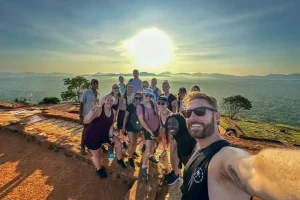
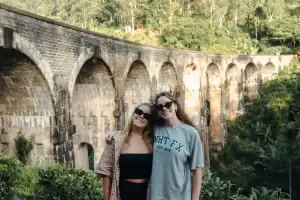
One Life Adventures runs small group tours across Sri Lanka designed for solo travellers aged 18-35. You will go on safari in Yala National Park, ride the famous hill country train through tea plantations, explore the ancient ruins of Sigiriya, and experience the culture and food of this remarkable island -- all with a group of like-minded travellers.
Recent Posts
- Best Time to Visit Sri Lanka: Month by Month Weather Guide

- Philippines Itinerary: 2 Weeks, Plus 1 and 3 Week Routes

- Best Places to Visit in Sri Lanka: 20 Must-See Attractions
- Best Time to Visit the Philippines: Month by Month Weather & Crowds
- Best Time to Visit Vietnam: Month by Month Weather & Crowds